Military vehicle parts: market insights

Notes from the yard on HMMWV, MRAP, 5-ton and FMTV sustainment — written by a supplier that has been sourcing and shipping NSN-coded military truck parts since 1951.

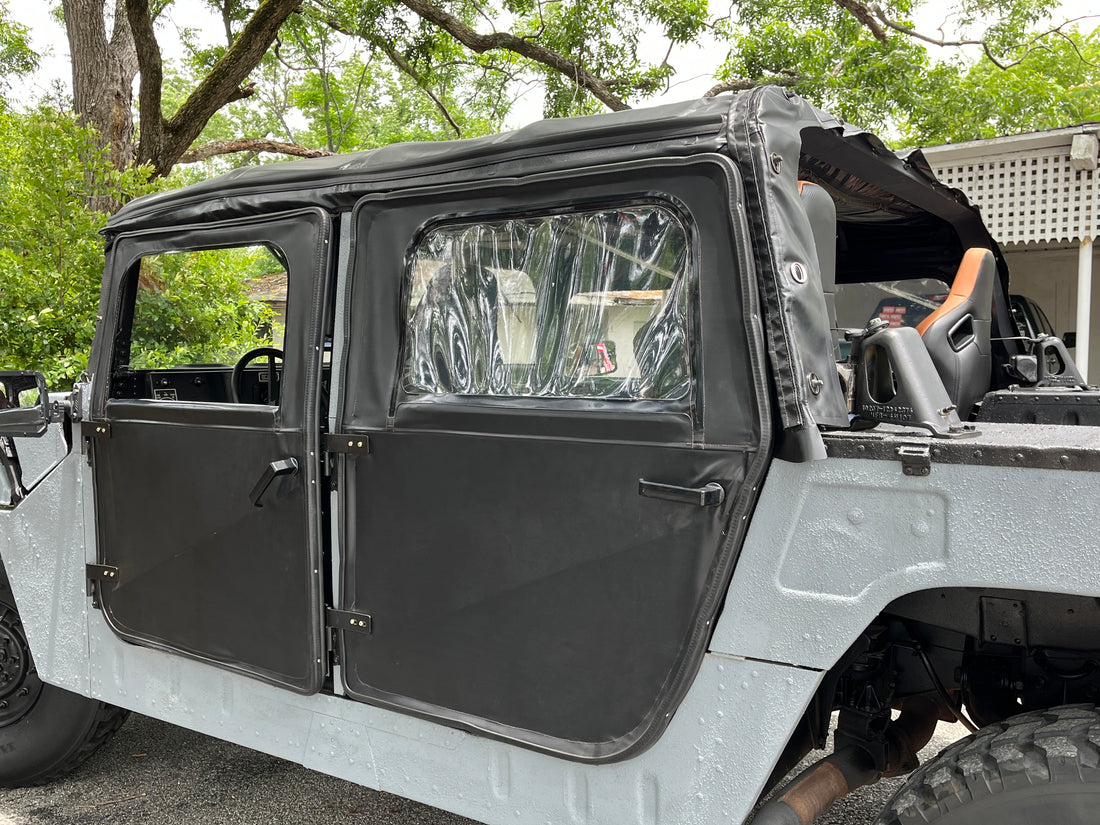
A HMMWV stripped to bare metal partway through a rebuild at SECO

01 · Sustainment

The reset economy: why HMMWV and 5-ton fleets get rebuilt, not replaced

Military tactical vehicles are rarely replaced when they wear out. They are reset — stripped, inspected, rebuilt and returned to service, often more than once across a service life measured in decades. HMMWV, M35, M939 and FMTV fleets fielded in the 1980s and 1990s are still working, and the decision in front of most operators is not what to buy but what to keep running.

That is a spare parts problem before it is a vehicle problem. A reset program lives or dies on whether the line items are available in the quantities and conditions the schedule assumes. Where they are not, the program slips or the vehicle is cannibalised to keep another one moving.

SECO has worked this side of the market since 1951, supplying military truck parts and rebuilding vehicles for the U.S. military and allied governments across more than 30,000 completed contracts — from a single line item through to complete reset programs run in-country or at our own facilities.

HMMWV parts · 5 ton parts (M809/M939) · 2.5 ton parts (M35)

Racking of shelved NSN-coded parts stock inside a SECO warehouse

02 · Supply

When the production line stops: NOS surplus and obsolete stock numbers

Military platforms outlive the factories that supplied them. Original manufacturers close lines, sell tooling or exit defense work entirely, while the vehicles those parts belong to stay in service another twenty years. The National Stock Number remains valid; the source disappears.

At that point military surplus is not a discount channel — it is frequently the only channel. New Old Stock (NOS), overhauled and remanufactured inventory becomes the practical way to keep an out-of-production platform mission capable, and the NSN becomes the one thread that reliably connects a requisition to a part that actually fits.

It is why we hold depth rather than breadth alone: over 80,000 line items, with the condition stated against every item we quote, so a buyer can tell New, New Surplus, Overhauled, Remanufactured and Used apart before committing.

MRAP parts · M113 APC parts · Technical manuals (TM)

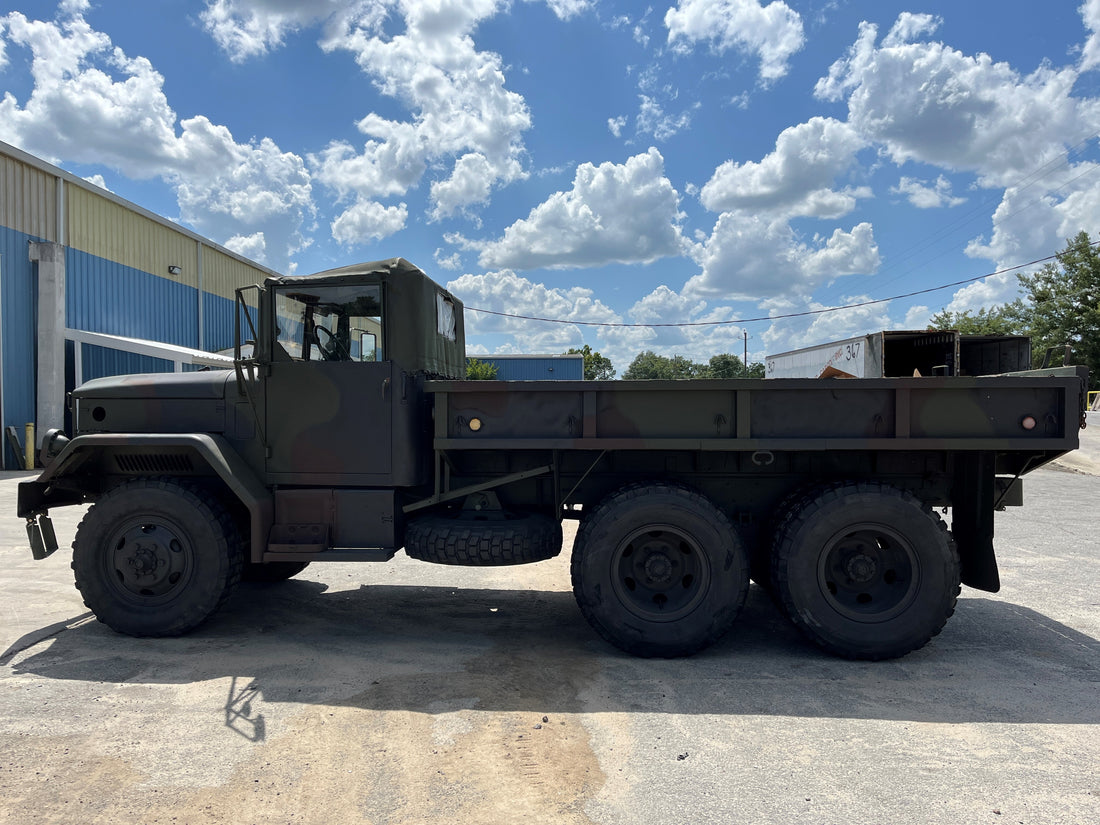
Military cargo trucks in the SECO yard, prepared and moved out to customers

03 · International

Allied fleets, American iron: supplying US military vehicle parts overseas

U.S.-manufactured tactical vehicles serve in allied inventories worldwide, transferred through foreign military sales and direct commercial purchase. The vehicle arrives; the sustainment tail does not always follow. Operators inherit a platform with no domestic parts base, no depot, and maintenance manuals written for someone else's supply system.

The gap that opens is rarely about money. It is about knowing which stock number supersedes which, which parts interchange across variants, and how to move a controlled item across a border legally. Export licensing alone stops more orders than price does.

SECO supplies defense forces with military vehicle spare parts and modernization kits, offers in-country training, and applies for export licenses where a part requires one — working to U.S. military quality control standards across every program.

HEMTT M977 parts · M1070 HET parts · LMTV / FMTV parts

What is an NSN (National Stock Number)?

An NSN is the 13-digit number used by the U.S. Department of Defense and NATO to identify a standardized supply item. It is written either hyphenated, as 5330-01-456-8823, or as a plain 13-digit string. The first four digits are the Federal Supply Class (FSC), the next two identify the country that codified the item, and the last seven are unique to that item. Two parts with the same NSN are the same item, whoever manufactured them — which is why the NSN, not the brand, is the reliable way to order military parts.

What does NOS mean on a military parts listing?

NOS stands for New Old Stock: an item that is new and unused, from original production, but manufactured some time ago. It is not used, refurbished or repaired. SECO is a government surplus dealer, and our parts are New, New Surplus (NOS), Overhauled, Remanufactured or Used — with the condition stated on every item we quote.

Can you still get parts for out-of-production military vehicles?

Usually, yes. When a manufacturer stops production the stock number stays valid, and surplus, overhauled and remanufactured inventory becomes the practical source. SECO holds over 80,000 line items across wheeled and tracked platforms, and most of that inventory is not listed online — so a part missing from the website is not the same as a part we do not have.

Which military vehicles does SECO supply parts for?

Wheeled platforms include the HMMWV (all variants), Hummer H1, CUCV, M35 series 2.5 ton, M809 and M939 series 5 ton, M915–M920, HEMTT 8×8, FMTV and LMTV, M1070 HET, M1000 trailer, MRAP RG-31 and RG-33 variants, and the M1161 / M1163 Growler. Tracked platforms include the M113 APC, M109 Howitzer, M88 recovery vehicle, M48 and M60 tanks, M1 Abrams and the M2/M3 Bradley.

Do you ship military vehicle parts internationally?

Yes. SECO ships to allied governments and commercial fleets worldwide. International orders carry a $200 minimum purchase order because of the additional paperwork involved. Some parts require an export license before shipping; we can apply on your behalf, and the license fee is $100 unless the order is over $650. Ask us before checking out so licensing and freight are settled up front.

How do I find the right part number?

Work from the technical manual for your platform. Find the figure and item number in the TM, send it to us with your vehicle model and serial range, and we will match it against stock. If you already have an NSN or an OEM part number, that is faster still. Our TM library is here.
Working a sustainment problem?

Tell us the platform and the line items. If it is not on the website, it is very likely on a shelf — most of what we hold is not listed online.

Request a quote